
The PDHS questionnaire has been developed through a systematic and evidence-based process involving national and international experts.
The development process included:
The following surveys and international guidelines were reviewed:
Following completion of the initial draft, the proposed questionnaire underwent several stages of technical review.
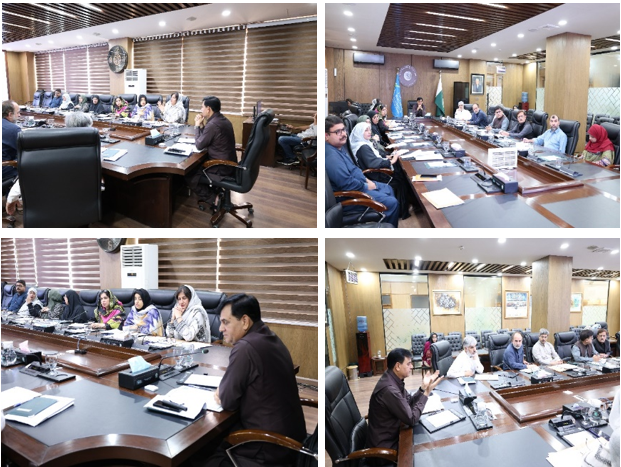
The comparison of survey modules and proposed indicators was presented before the PBS In-House Technical Committee on 18th July 2025.
Based on recommendations of the committee:
The committee further recommended constituting a broader Technical Committee comprising national and international experts.
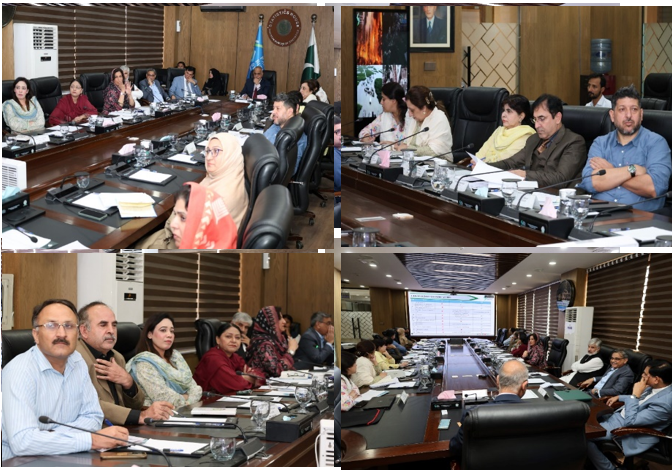
| Sr. No. | Members | Designation |
|---|---|---|
| 1 | Chief Statistician, PBS, Islamabad | Chairperson |
| Internal Committee Members | ||
| 2 | Member (SS/RM), PBS, Islamabad | Member |
| 3 | Member (C&S), PBS, Islamabad | Member |
| 4 | DDG (PSLM/PCS), PBS Islamabad | Member |
| 5 | DDG (LFS), PBS, Islamabad | Member |
| 6 | Ms. Ayesha Sajid, Instructor, PBS Islamabad | Member/Secretary |
| 7 | Dr. Shabana Saleem, DG, Population M/O National Health Services and Regulations, Islamabad | Member |
| 8 | Dr. Saima Bashir, Member Planning and Social Sector, Planning Commission | Member |
| 9 | Dr. Asif, Chief Health, M/O PD&SI | Member |
| 10 | Mr. Sabina Imran Durrani, Chief Population, M/O PD&SI | Member |
| 11 | Ms. Rabia Zafar, Director, NIPS Islamabad | Member |
| 12 | Dr. Soofia Yunis, Director Programs, M/O National Health Services and Regulations, Islamabad | Member |
| 13 | Dr. Tauseef Ahmed, Demographer | Member |
| 14 | Dr. Ayesha Shiraz, Consultant/Professor, Health Services Academy – MNHSRC | Member |
| Representatives from Relevant International Organizations | Member | |
| 15 | Representative from ICF | Member |
| 16 | Representative from UNFPA | Member |
| 17 | Representative from UNICEF | Member |
A Technical Committee was constituted on 6th October 2025 consisting of:
The first meeting of the Technical Committee was held on 30th October 2025. Members reviewed the complete questionnaire and proposed:
To facilitate detailed review, three sub-technical committees were established to review modules mention against each committee:
Sub Committee I
Meeting was held on 5th January 2026 to review Governance, education, ICT, housing, wealth index and WASH modules.
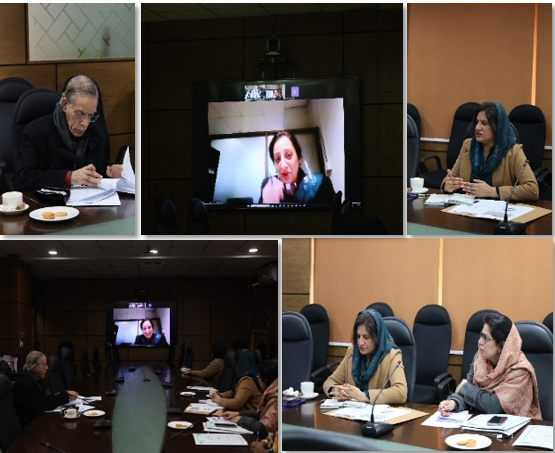
The first meeting of the Technical Committee was held on 30th October 2025. Members reviewed the complete questionnaire and proposed:
Composition of Sub Committee I
Sub Committee II: Meeting was held on 14th January 2026 to review Fertility, family planning, pregnancy, maternal health, antenatal and postnatal care and reproductive health modules.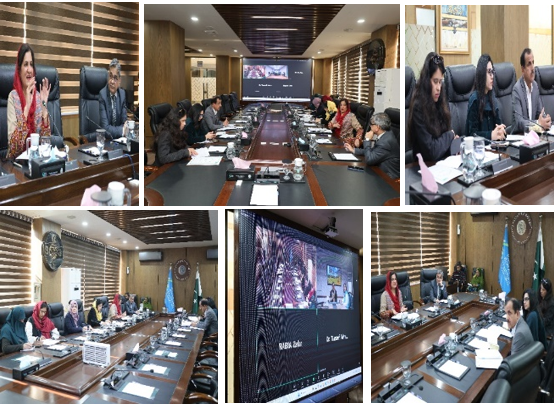
Composition of Sub Committee II
Sub Committee III : Meeting was held on 22nd January 2026 to review Child health, nutrition, women’s health, domestic violence, climate change and Early Childhood Development (ECD) modules.
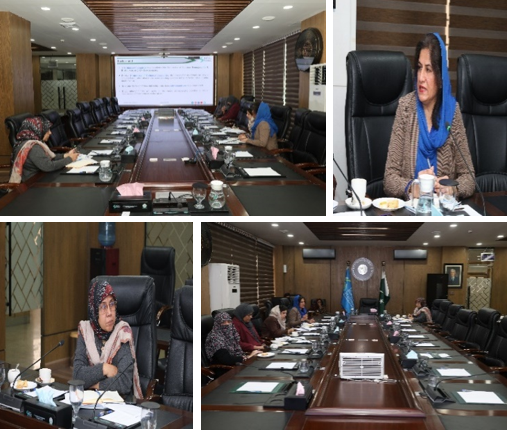
Composition of Sub Committee III
Multiple consultative meetings were held, and recommendations from all stakeholders were incorporated into the revised questionnaire.
A technical meeting between PBS and UNICEF was held on 28th April 2026 for inclusion of the ECDI 2030 module in PDHS in line with international practice.
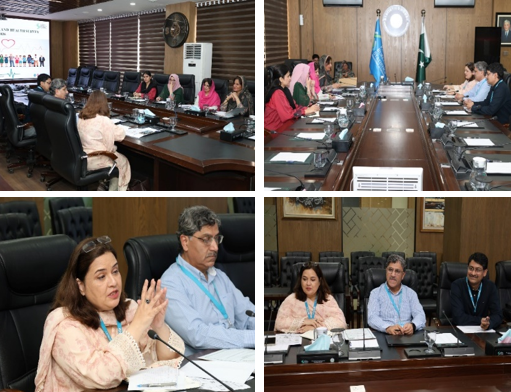
Technical meeting between PBS and UNICEF held on 28th April 2026 for inclusion of the ECDI 2030 module in PDHS in line with international practice. Virtual follow-up meeting was held on 8th May 2026 to finalize the proposed approach. The ECDI module will strengthen national monitoring of child development and improve international comparability.
Major Sector covered
The proposed PDHS questionnaire includes modules covering:
Survey Methodology
Data Collection
Households will be selected scientifically from sampled Enumeration Blocks throughout Pakistan.
Field Team Composition
To ensure high-quality data collection and respondent comfort, each field team will comprise:
Survey Status
Questionnaire finalized following technical consultations and stakeholder review. Preparatory activities for field implementation are underway.